Gardener Alperton: Recycling and Sustainability for Greener Gardens
 Welcome to our sustainability page for Gardener Alperton, where an eco-friendly waste disposal area meets a sustainable rubbish gardening area. We champion practical, low-impact practices that keep soil healthy, reduce landfill, and support a circular approach to garden materials in Alperton and surrounding neighbourhoods. Our approach balances professional garden care with local environmental priorities so that every pruning, turf replacement and green clearance becomes an opportunity to recycle and reuse.
Eco-friendly Waste Disposal Area
We design every eco-friendly waste disposal area on site to prioritise separation at source and maximum material recovery. That means designated zones for wood, green waste, soil and inert material, and a clear flow from collection to processing. Garden waste such as grass clippings and prunings are diverted to compost or woodchip processing; pots and hard landscaping materials are sorted for reuse. As a local Alperton gardener team we coordinate with council collections where appropriate and ensure bulky organic volumes are captured rather than sent to residual streams.
 In line with boroughs' approach to waste separation, our systems mirror municipal schemes for glass, paper, plastic and organics to reduce confusion and contamination. We provide clear labelling and keep contamination rates low by training crews and advising clients. Key recycling activities relevant to the area include:
- Separation of green waste for municipal or private composting facilities
- Reuse of soil and mulch where safe and appropriate
- Segregation of inert rubble and paving for recycling at civic amenity points
Recycling Percentage Target and Performance
Our measurable goal is a recycling target of 65% by 2030 for all routine garden projects in the Alperton area, with interim milestones each year to track progress. We report activity across five categories: organics, wood, soil/substrate, recyclable plastics/glass/metal, and residual waste. Through route planning, worker training and local partnerships we aim to steadily increase diversion from landfill. Transparency and continuous improvement lie at the heart of this target: we monitor tonnes diverted, contamination rates and the percentage of material redirected to reuse or composting.
 Local transfer stations are a crucial link in this system. We work with municipal civic amenity sites and transfer stations serving Brent and neighbouring boroughs to ensure properly sorted loads are processed efficiently. Using nearby transfer points reduces vehicle miles and enables faster turnaround for materials destined for municipal composting, anaerobic digestion or licensed recycling centres. When larger volumes are present, consolidated drop-offs minimise transport emissions and handling costs.
Partnerships with charities and reuse organisations are central to converting surplus items into community benefit. We collaborate with local non-profits to divert soil, planters, usable timber and garden furniture to social enterprises and community projects. These partnerships help vulnerable residents, support community greening schemes and ensure that functional materials get a second life rather than becoming waste.
Fleet and logistics matter: our transition to low-carbon vans and efficient routing reduces the carbon footprint of garden waste collection and delivery. We use a mix of electric and low-emission vehicles where infrastructure allows, and maintain a programme of vehicle efficiency checks and driver training. For heavier loads we use modern low-emission light commercial vehicles and co-ordinate collections to minimise empty running. Through these measures the gardening Alperton service reduces transport-related emissions while maintaining reliable operations.
 Practical, sustainable processes are embedded in routine garden projects. For example: when removing an overgrown border we prioritise on-site chipping and composting where safe to do so; where reuse is preferable, reclaimed timber and paving are reserved for future projects or offered to partner charities. Clients notice the difference in cleaner sites and reduced rubbish output because we plan for reuse, repair and recycling at the outset.
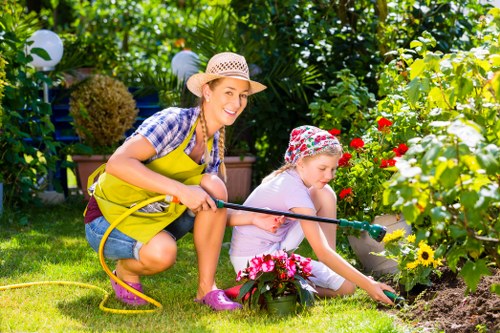 How this benefits the community: lower disposal costs, less traffic from repeated waste runs, and increased availability of reused materials for community gardens and local projects. We encourage residents to adopt small changes that compound across the neighbourhood: segregate garden organics, donate usable items, and choose contractors who prioritise reuse and low-carbon logistics. Together, these choices build a resilient, circular gardening culture in Alperton.
In summary, the Gardener Alperton sustainability plan is a practical, measurable programme combining an eco-friendly waste disposal area, a dedicated sustainable rubbish gardening area, targeted recycling goals, coordination with local transfer stations, partnerships with charities and a commitment to low-carbon vans. By aligning everyday gardening work with broader borough waste separation practices (paper, glass, plastics and organics) and local reuse networks, we strive to deliver greener gardens and a stronger local environment. We believe every garden project is an opportunity to reduce waste, support the community and protect the local environment.